Education

Why Traditional Automation Needed Perfect Sequencing

And Why OmniPalletizer Doesn't

6 min readFebruary 3, 2026

Blog post header image for Why Traditional Automation Needed Perfect Sequencing

Share

Link Copied
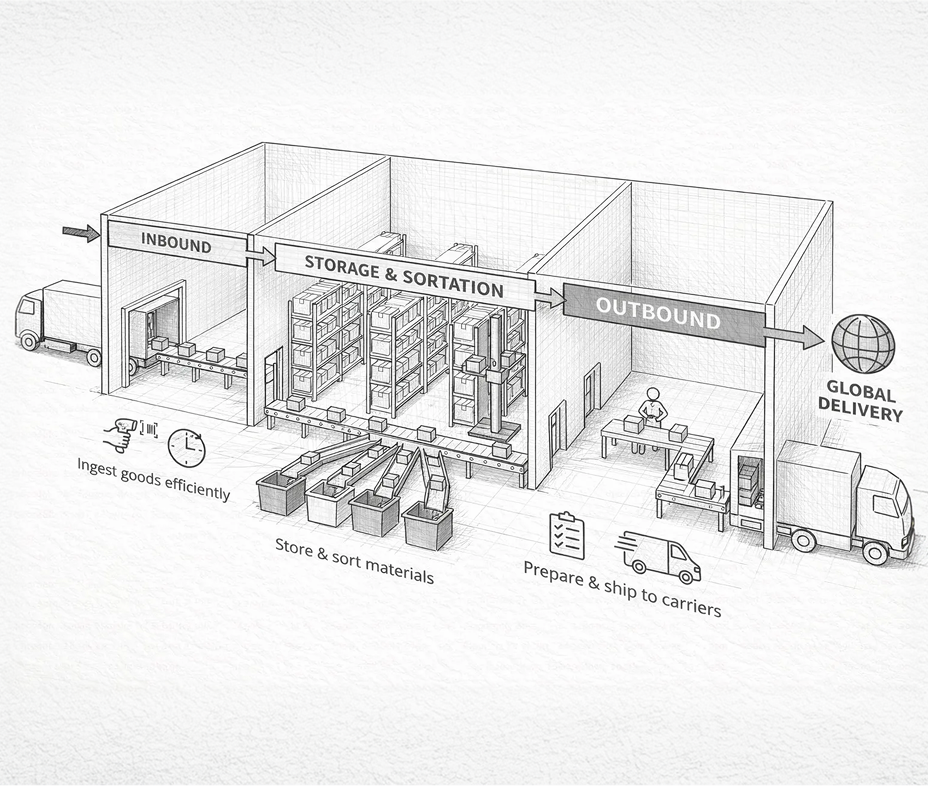
Inbound and Outbound Automation Diagram

Why this problem exists at all
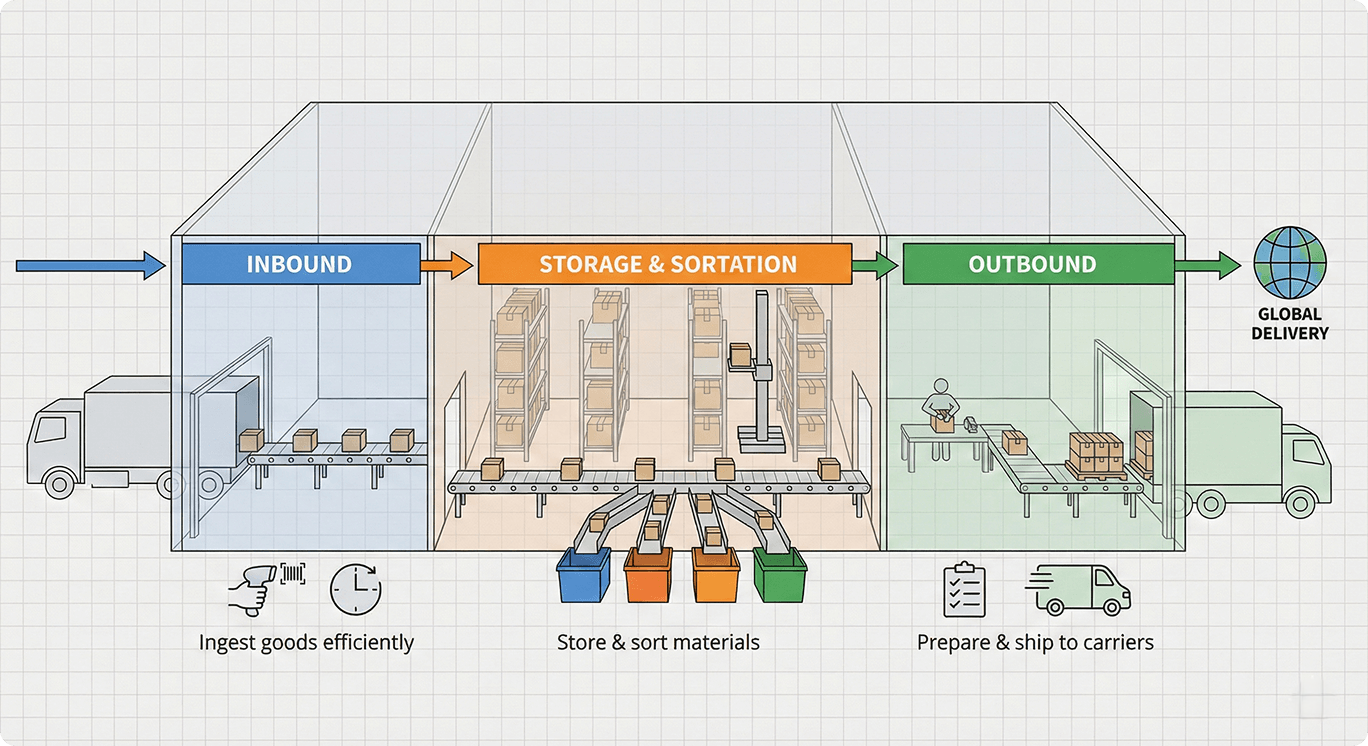
Almost every warehouse does three things: inbound (getting goods into the building), storage and sortation (AS/RS, shuttles, racking, AMRs), and outbound (preparing goods to ship to the next location).
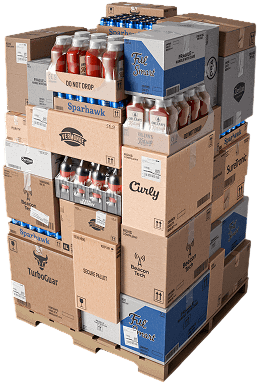
Outbound is where most networks rely on mixed-case pallets: combining different SKUs on the same pallet so shipments are dense, stable, and workable for stores and routes. The challenge isn’t “moving boxes.” It’s building pallets that satisfy real business rules under real operating variability.
That’s where a hidden constraint shows up: the handoff between storage and outbound often depends on controlling which case arrives when. Traditional automation solved this by pushing the problem upstream—turning the rest of the facility into a sequencing machine. That idea has a name: perfect sequencing.
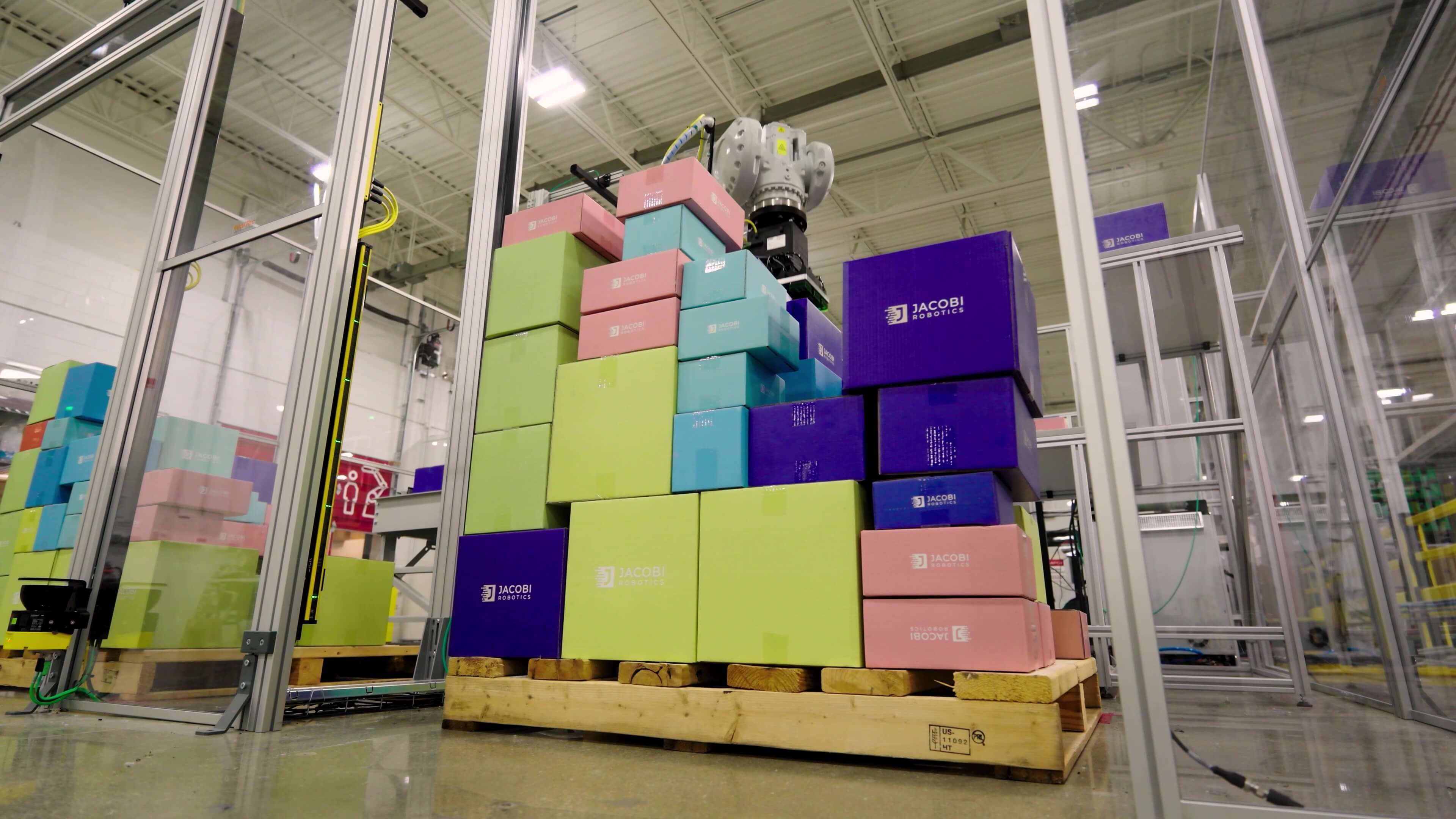
Full Stacked Pallet

What “perfect sequencing” really means

A mixed-case stacking plan is not just “these SKUs go on this pallet.” It implicitly defines a timeline: which case must arrive next, and which cases must arrive after that, in order to build a pallet that is stable and compliant with rules.
Perfect sequencing is the decision to treat that timeline as non-negotiable.
  • The pallet algorithm outputs a specific arrival order.
  • The upstream system must deliver that order precisely.
  • Any deviation becomes an exception—often costly to absorb.

This is why perfect sequencing is usually paired with heavy upstream infrastructure: you need something like an AS/RS and buffering logic to “manufacture” the desired case order and to keep the palletizer fed in exactly that sequence.
AS/RS Sequencing Diagram

Why perfect sequencing was necessary

Perfect sequencing was not a philosophical choice. It was a workaround for two hard constraints.
01.

The stacking problem is algorithmically complex, and rule-based systems cannot adapt

Mixed-case palletizing has a combinatorial explosion: many SKUs, many constraints, many feasible-but-bad options. Historically, many systems relied on rule-based templates—heuristics that produce a suboptimal but stable pallet if the input matches the assumptions.

The downside is rigidity. Once a rule-based planner commits to a plan, it often cannot replan quickly when a wrong case arrives or a dimension drifts; recomputing can be slow and disruptive, and every replan risks throughput loss and operational instability. This "fixed sequence" dependence is part of why older approaches were brittle.

02.

You need store-friendly pallets that follow business rules

Even if you could stack "anything," the pallet must satisfy the rules your network runs on: crush limits, heavy-to-light logic, aisle- or store-friendly grouping, stop sequencing, label orientation, carrier rules, and more.

This is the eggs-before-bricks problem: you can't just minimize travel or pick whatever is convenient; the order in which cases arrive changes what is possible to build without violating rules or damaging product.

Perfect sequencing tries to guarantee that the "right next box" always arrives, so the pallet plan remains valid.

The hidden cost: oversized, underutilized AS/RS

Once pallet quality becomes the primary objective, the upstream system is forced to pick in a way that serves stacking—not in a way that serves picking efficiency.
That creates a structural conflict:
  • Picking efficiency wants to minimize travel, reduce shuffles, batch intelligently, and keep equipment utilization high.
  • Stacking efficiency wants cases released in a very specific order, often requiring holds, resequencing, and “waiting” for the right case.
When you optimize the AS/RS for sequencing precision, you typically pay in one of two ways:
1.

Overcapacity: you size the AS/RS and buffers to handle resequencing while still meeting peak outbound, even though that capacity is idle much of the time.

2.

Underutilization: you throttle picking and retrieval to preserve sequence integrity, leaving throughput on the table when variability spikes.

In both cases, you are buying a sophisticated picking machine and then asking it to behave like a sequencing engine—an expensive mismatch.
Oversized AS/RS Diagram
Cost Up

Existing solutions rely on strict case sequencing + brittle & costly

Link Break

Real-world variability (deformed cartons, SKU drift) breaks templates

Why perfect sequencing breaks in real warehouses

Perfect sequencing breaks for reasons that are common in day-to-day operations, not exotic edge cases.
01.

Lumpy waves make sequencing hard to sustain

Real facilities see uneven flow: bursts from pick-to-belt, release waves, and live-loading variability. Integrators "actually see" imperfect sequencing and lumpy waves as a default condition.

Those waves are not just noise—they change which cases are available when. Maintaining a perfect arrival order under lumpy flow often requires larger buffers and more complex orchestration, which increases cost and failure modes.

02.

Packaging drift and data erosion degrade the plan

Even when a SKU ID is "the same," real cases drift: dimensions, corrugate stiffness, wrap style, label placement, and damage rate. Over time, the data used to generate the sequencing plan becomes less reliable, and what used to be feasible becomes fragile.

Modern systems increasingly emphasize adapting to "SKU drift" rather than assuming static master data.

03.

The system is brittle: tiny disruptions have outsized impact

When the plan depends on "Box #17 must arrive next," then a small disruption—a missing tote, a mis-scan, a short pick, a conveyor stop—can cascade. The palletizer waits, the upstream system scrambles, and the whole chain either slows down or spills into manual exception handling.

This brittleness is why sequenced mixed-case automation has historically been packaged as a mega-project—because you need the entire surrounding system to be engineered to protect sequence integrity.

04.

It is expensive, and few sites can justify it

Even if sequencing can be made to work, the economics are daunting: AS/RS capacity, buffers, controls integration, commissioning, and long-term tuning. Traditional paths assumed a mega-project that "only the top 1% of warehouses could justify."

Conclusion: sequencing was a workaround for a hard stacking problem

Perfect sequencing became the standard because it made mixed-case palletizing tractable for systems that could not adapt fast enough to real-world variation. It pushed complexity upstream—into expensive infrastructure—and demanded that the operation behave like a controlled lab.
But warehouses are not labs. They are living systems with variable flow, changing SKUs, and frequent small disruptions. The more your palletizing depends on perfect order, the more you end up paying—either in capital (oversized systems) or in performance (throttled picking and brittle recovery).

Where OmniPalletizer fits

Jacobi’s OmniPalletizer is built around a different premise: accept the sequence you get, and solve stacking fast enough to adapt in real time.
Instead of relying on fixed templates and a single “correct” arrival order, the approach is to plan stacks and robot actions from unsequenced case streams, honour network business rules, and validate performance using a digital twin driven by real SKU history and flow data.
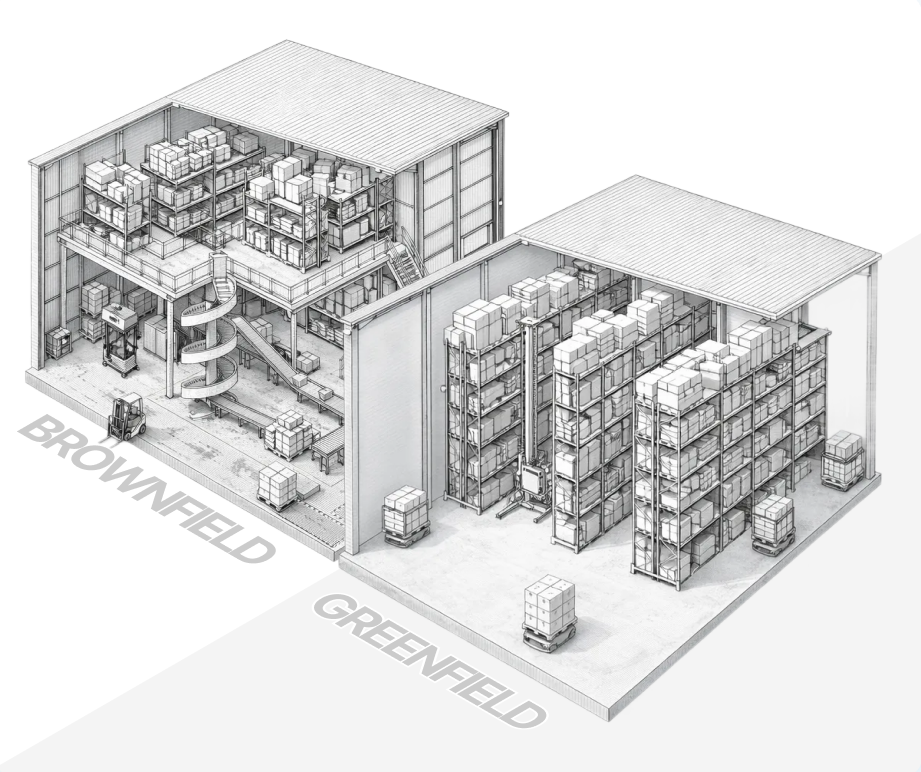
Practically, this shifts what the upstream system has to do. If the palletizer can adapt on the fly to whatever arrives, the warehouse can optimize picking for picking again—reducing the need for oversized sequencing infrastructure, improving robustness, and making modular deployment viable without rebuilding the building.
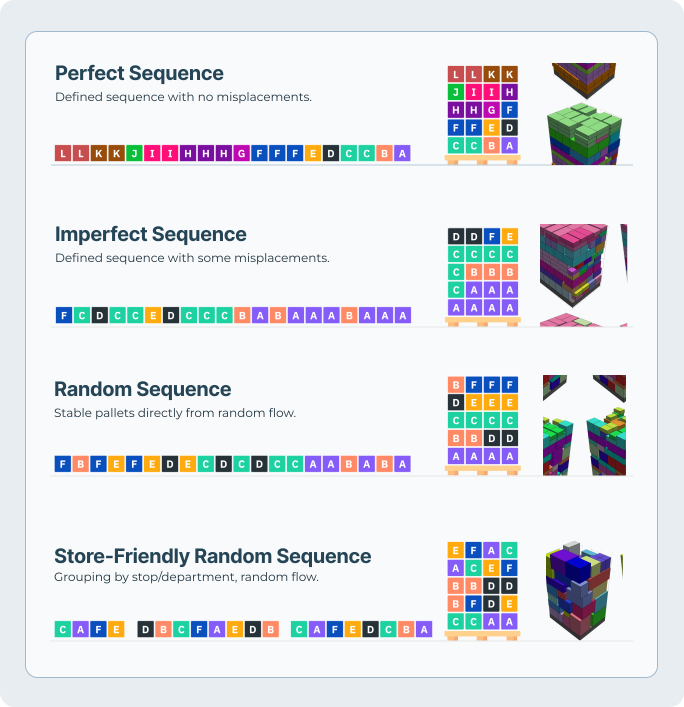
Various Sequencing Methods
The Jacobi OmniPalletizer automates all major palletizing flows with a single, flexible software product. It's a multi-purpose, AI-powered palletizing engine that adapts to any warehouse case flow or hardware configuration.